A Different Perspective on Wellbeing
The Human Regenerator creates a whole-body Cold Atmospheric Plasma field. During each session, you simply relax while your body is immersed in this unique plasma state.
Although invisible, this carefully generated plasma has become the focus of extensive scientific research over the past two decades. Its ability to interact with biological systems has made Cold Atmospheric Plasma one of the most exciting areas of modern plasma science.
Why has CAP attracted so much scientific interest?
Over the past two decades, Cold Atmospheric Plasma has become the focus of thousands of published scientific studies.
Researchers have demonstrated that CAP can interact with biological systems in unique ways, leading to growing interest across plasma physics, biology and medicine.
One area receiving particular attention is how CAP influences the body's natural signalling processes. These complex communication networks help cells respond, adapt and maintain normal biological function.
Research is also exploring the relationship between CAP, oxidative balance and other fundamental biological processes.
While research continues to evolve, findings to date have highlighted the significant potential of Cold Atmospheric Plasma across a broad range of scientific and medical research.

What happens during a session?
A session is simple and completely passive.
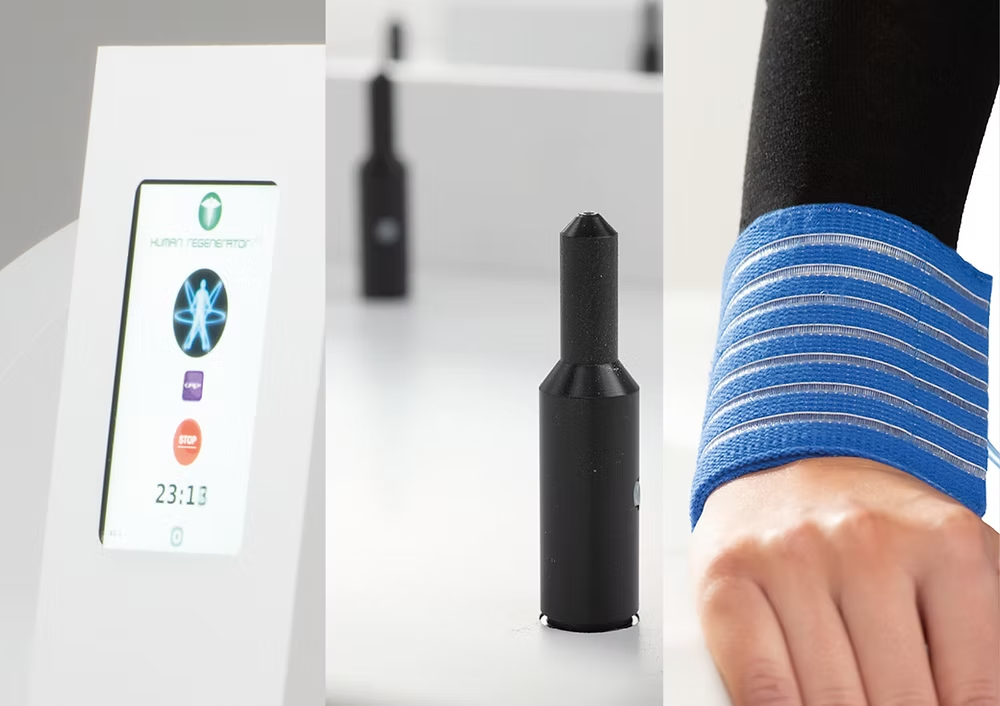
You lie comfortably on the Human Regenerator while contact applicators are placed on your hands and feet. For around 30 minutes, your body remains immersed in the plasma field while you simply rest.
Most people describe the experience as calm and relaxing. Some notice a gentle tingling sensation, while others feel very little at all.